About IMLM
International Mother Language Movement (IMLM) is a community based platform led by the Bangladeshi-Australian community in Canberra dedicated in highlighting the importance of preserving all the languages across the world especially endangered languages in a multilingual and multicultural context. We are committed to sensitizing the various Australian Governments, various communities about the necessities of taking appropriate measures to protect and preserve all the spoken languages including indigenous languages as a means to strengthen the multicultural bond. We believe mother language is an indispensible element of cultural identity and protecting and preserving all the languages across all communities will lead to a more cohesive society based on equity and eliminate the scope of an important source of cultural discrimination.
Significance of the movement
Language is critical for human society. It is through language that one communicates meaning and develop a sense of individual and communal identity.
Mother Language or mother tongue may be applied in many ways. The term ‘mother tongue’ or ‘mother language’, although widely used, may refer to several different situations. Definitions often include the following elements: the language(s) that one has learnt first; the language(s) one identifies with, or is identified as a native speaker of by others; the language(s) one knows best and the language(s) one uses most. ‘Mother tongue’ may also be referred to as ‘primary’ or ‘first language’ (source: UNESCO). Nelson Mandela once stated “If you talk to a man in a language he understands, that goes to his head. If you talk to him in his language that goes to his heart”. Mother language is the most basic and valuable asset a person can own. Being able to communicate ones feelings, thoughts and emotions clearly in a way that is understood within its cultural context allows a person to communicate in a way that is unhindered by misunderstanding.
The increasing trend of globalisation has had a dramatic impact on the diversity of languages worldwide. Historically, colonisation, imperialism and mass migration have led to the demise of languages as one language became more economically and socially advantageous than other. In the twentieth and twenty first century, the speed of this trend has increased exponentially. Out of the estimated six thousand languages currently spoken worldwide, it is foreshadowed that if the current trend continues, half of the languages may perish during this century. Renowned linguists contend that the extent and rate of the ongoing loss in the world’s linguistic diversity is currently so cataclysmic that it makes the word ‘revolution’ look like an understatement.
In Australia, there was a systematic slaughter or removal of native people, combined with assimilation policies. While there were an estimated two hundred languages spoken in Australia before European colonisation, there are currently less than fifty that are considered healthy – that is, that are taught to children and still used for meaningful communication. The institutionalised racism and assimilation policies produced extensive resentment of the invading culture among the indigenous people and provided greater motivation for retaining their indigenous culture. This demonstrates that preservation of language is the preservation of unique culture and hence identity, a connection between land, water, the people and their language that serves to maintain community solidarity and dignity.
Language is immutably linked with culture and cultural identity. Therefore the demise of a language is a loss of identity for the community involved.
On 17 November 1999, the United Nations Educational Scientific and Cultural Organisation (UNESCO), in recognition of the supreme sacrifice of the Bangla (Bengali) speaking people of Bangladesh, proclaimed 21 February as International Mother Language Day. It urged member states to observe the day in a befitting manner to promote awareness of linguistic and cultural diversity. UNESCO Director General Irina Bokova outlined the importance of valuing and preserving languages stating that, “Multilingualism is our ally in ensuring quality education for all, in promoting inclusion and in combating discrimination. Building genuine dialogue is premised on respect for languages”.
UNESCO’s decision was the culmination of the extraordinary efforts over few years initiated by expatriate Bangladeshi community. Bangladeshis took the lead to ensure global recognition of the significance of all mother languages.
On 16 May 2009, the United Nations General Assembly in its resolution A/RES/61/266 called upon Member States “to promote the preservation and protection of all languages used by peoples of the world”. By the same resolution, the UN General Assembly proclaimed 2008 as the ‘International Year of Languages’ to promote unity in diversity and international understanding through multilingualism and multiculturalism.
Background of the International Mother Language Day:
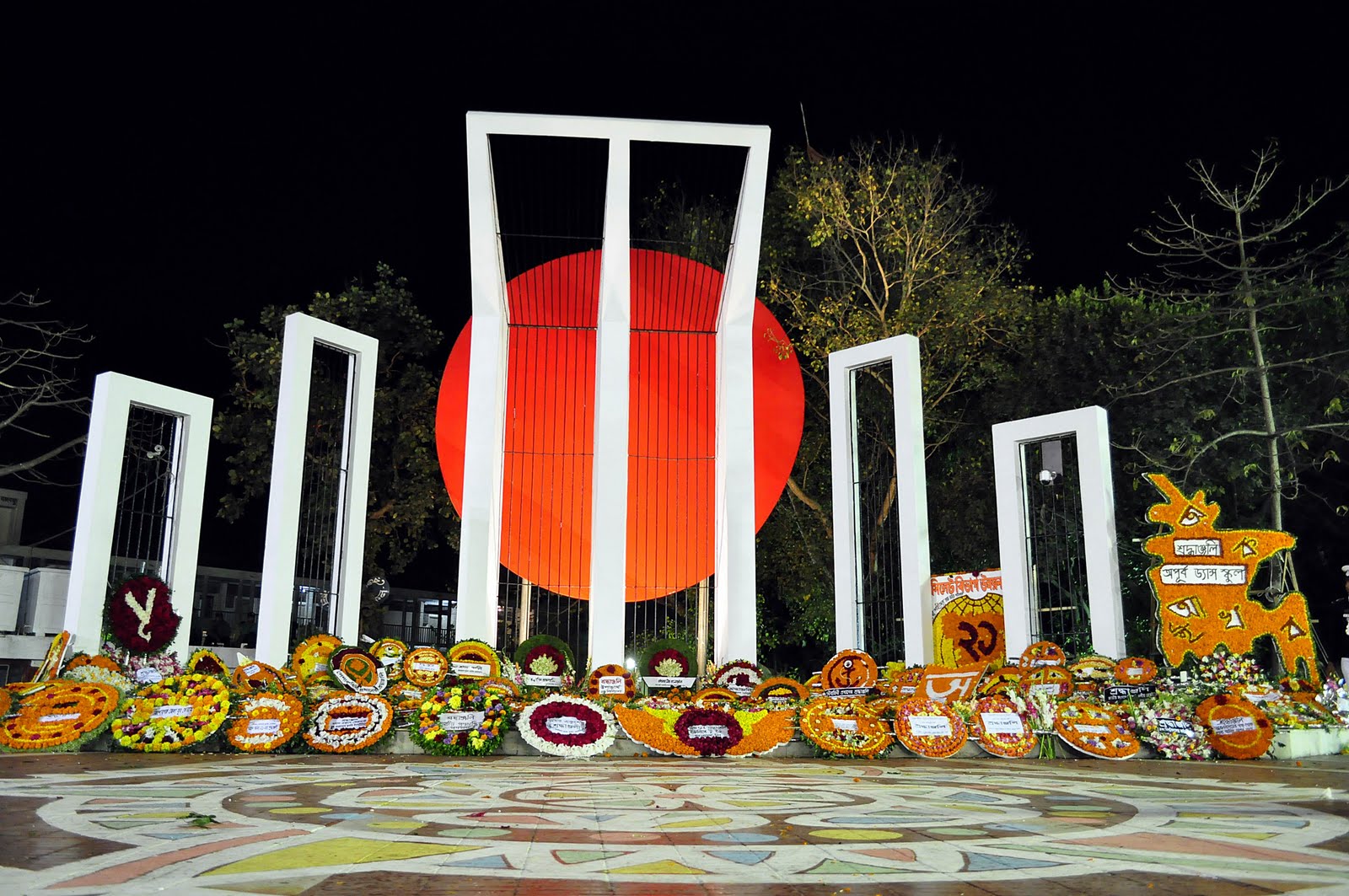
The history behind the ground breaking initiative and the UNESCO decision had its foundation in Bangladesh and in Bangla (Bengali) language. In Bangladesh, 21 February is a commemoration of a historic campaign in 1952 to have Bangla recognised as the national language of Pakistan. On that sad yet very proud and historic day, a number of students of the University of Dhaka and some common people were killed by police and army in Dhaka during Bangla language protests. In fact the language movement of 1952 in Bangladesh (erstwhile East Pakistan) worked as a key inspiration for Bangladesh to achieve its independence in 1971.
To commemorate this movement, a solemn and symbolic sculpture was erected at the place of the massacre in Dhaka, Bangladesh. The day is revered in Bangladesh and, to a somewhat lesser extent, in west Bengal in India as the Language Martyrs’ Day. To echo the same respect for mother languages, many cities of the world followed the lead of Bangladesh and established ‘Mother Language Monuments’. A replica of the original monument of Bangladesh (Shaheed Minar) was built in Tokyo, Japan. Monuments are also built in Ashfield Park in Sydney, London and Oldham in the United Kingdom, Bari of Italy, Surrey of Canada and few other places.
About Us
International Mother Language Movement (IMLM) is an inclusive community based movement. Given the historic connection to the genesis of Language Movement in 1952 by the Bangla (Bengali) speaking people in now what is Bangladesh, the Bangladeshi-Australian community in Canberra took the initiative to launch this movement with the vision of securing national recognition of 21 February as the International Mother Language Day (IMLD) and celebrating the day nationally under the auspices of the Australian Governments. IMLM aims to build a Mother Language Monument in a place of national significance in Canberra, Australia by the year 2016.
We welcome all the ethnic and indigenous communities in the Australian Capital Territory region to join in our endeavour to highlight the importance of preserving mother languages spoken by the different communities.
The organisational structure of this movement is expected to take a formal shape as we move forward to formally launch the movement encompassing all ethnic communities.
Our Role:
The Bangladeshi-Australian community in Canberra is launching this movement to establish 21 February as a day of national significance, celebrated across Australia to respect not only the growing numbers of mother languages in Australia but also to preserve the traditional indigenous languages some of which are in the verge of extinction.
We will commence a three-year plan involving increasing community awareness, fund raising activity to support language conservation and building a Mother Language Monument in a place of national significance in Canberra, Australia. This movement will allow us to commemorate 21 February every year as the ‘International Mother Language Day’ to signify the global importance of all mother languages.
IMLM recognises the linguistic diversity of Australia and the world. This movement will complement the spirit and practical measures to conserve our indigenous languages and all endangered languages of the world and respect linguistic diversity of all the communities. IMLM will include plans to encourage variety of community activities with the ‘Multilanguage focus’ to celebrate mother languages across the globe.
IMLM will present Australia as the world leader by not only recognising 21 February as a day of national significance but also by its commitment to preserve mother languages from all over the world including indigenous languages.
The Bangladeshi-Australian community in Canberra will assume the bulk of the responsibilities to lead the movement in partnerships with all the Australian communities including indigenous community, multicultural peak bodies, diplomatic missions, universities, ethnic schools network and print and electronic media.
Vision Statement:
We will promote linguistic diversity and develop a multilingual society to preserve cultural pluralism and greater understanding, trust, tolerance and mutual respect across all communities.
Mission Statement:
We will establish International Mother Language Day as a day of great/national significance by bringing people from different communities to a common ground to celebrate the value of unity through linguistic and cultural diversity.
Objectives:
International Mother Language Movement (IMLM) aims to:
- Celebrate 21 February each year as International Mother Language Day across Australia as a day of national significance to:
a) promote awareness about the importance of preserving and protecting mother languages all across the world; and
b) sensitize Australian Governments, community organisations to undertake appropriate steps to protect the endangered languages especially indigenous languages.
- Work as a platform for connecting ethnic and indigenous communities to work in unison to celebrate IMLD.
- Erect Australian Mother Language Monument (AMLM) in a place of national significance in Canberra, Australia.
What’s On:
Planning Workshop
As part of the initial planning phase, we have planned to organise a workshop to share backgrounds, goals, thoughts, pathways, roles, process and programs among our peer Australian communities and peak organisations. This workshop is the first of many to assist all of us to come up with a collective approach and support structure to successfully implement the IMLM initiatives.
Day: Wednesday
Date: 4 December 2013
Time: 5:00 pm – 7:45 pm
Venue: Theo Notaras Multicultural Centre
2nd Floor, North Building, 180 London Circuit, Canberra City
Mother Language Walk
As part of the commemoration of International Mother Language Day 2014, IMLM will organise a Mother Language Walk in Canberra. Details of this program will be announced soon.
Date: 21 February 2014
Disclaimer:
International Mother Language Movement (IMLM), represented by the Bangladesh Australia Association Canberra Inc (BAAC), provides the content and material on this website for information purposes only. We make every effort to keep its content up to date and accurate, but we make no claim as to its accuracy, currency or reliability.
Except to the extent required by law, we are not responsible or liable to any person for:
- the information or advice which is provided on this website or incorporated into it by reference;
- any loss or damage you incur as a result of using this website, or as a result of using any information and material contained on this website;
- any material or contributions made to this website by third parties; and
- Your responsibilities and risk.
We provide information on this website on the basis that you are responsible for assessing the relevance and accuracy of its content. By accessing our website, you assume all risks associated with use of the site.
Our links to external websites
This website includes links to other sites, including those operated by other government bodies, non-government organisations and individuals. These third-party websites are not under our control. Users should note that many links are provided to content outside of Australia.
Each link is provided for your assistance only. We are not:
- endorsing the products, services or information available via any linked site;
- making any representation or warranty about the products, services or information available via any linked site; and
- endorsing or making any representation or warranty about the owner or operator of any linked site.
Copyright:
Copyright Statement
Copyright in this website is owned by International Mother Language Movement, represented by the Bangladesh Australia Association Canberra Inc (BAAC).
Material published on this site (information, text, images, sounds and audio-visual material) is protected by intellectual property law: this includes copyright and, where applicable, moral and cultural rights.
You may download, display, print or reproduce this content in unaltered form for educational purposes, non-commercial research or study. Any use or referral of content from this website must include full and proper acknowledgement. For any other use or more information please contact xxx@gmail.com.
Unauthorised commercial publication or reproduction of any part of this website is specifically prohibited.
International Mother Language Movement, represented by the Bangladesh Australia Association Canberra Inc (BAAC), does not own the copyright in all the material on this website. In some cases copyright belongs to third parties and has been published on this website under a licence agreement: this does not authorise you to copy that material.
If you wish to adapt, publish, distribute or commercialise any material presented on this website you must get written permission from the Library: you may also be required to get additional copyright clearances from the rights holder.
Duration of copyright in materials featured on this web site may vary: materials may also carry multiple copyrights. It is your responsibility to obtain written permission from the copyright holders or their agents before reproduction of any work. Failure to do so will constitute an infringement under Australian copyright law.
Copyright is a complex area of law, and you are encouraged to contact the Australian Copyright Council for further information on your rights and responsibilities.
IMLM supports the intellectual property rights of others and every reasonable effort has been made by the Bangladesh Australia Association Canberra Inc (BAAC) to locate, contact and acknowledge copyright owners. Any copyright owner not properly identified and acknowledged on this website should contact xxx@gmail.com so that corrections can be made.
Important Links:
United Nations Educational, Scientific and Cultural Organization
National Indigenous Languages Policy of Australia
http://arts.gov.au/indigenous/languages
Languages Services Policy of the Queensland Government:
The Western Australian Language Services Policy
http://www.omi.wa.gov.au/omi_language.cfm
Language Services Policy of the Northern Territory Government
http://www.rdia.nt.gov.au/__data/assets/pdf_file/0007/64537/Language_Services_Policy.pdf
Language Services Policy 2005 of the Victorian Government
http://www.dhs.vic.gov.au/__data/assets/pdf_file/0008/594926/language_service_policy.pdf
DECCW Aboriginal Languages Policy 2009 of the New South Wales Governement
http://www.environment.nsw.gov.au/resources/cultureheritage/09600ablangspol.pdf
ACT Community Language Schools Association
Mr Javed Mehr – President
GPO Box 1353, CANBERRA, ACT 2601
Tel : 6230 5191
Emai; : admin@actclsa.org.au
Web: http://www.actesa.org.au/
Ethnic Schools Association of Victoria
http://www.communitylanguages.org.au/
Bangladesh Australia Association Canberra Inc. (BBAC)